
Best Time to Pour Concrete in Grapevine, TX: Seasonal Guide
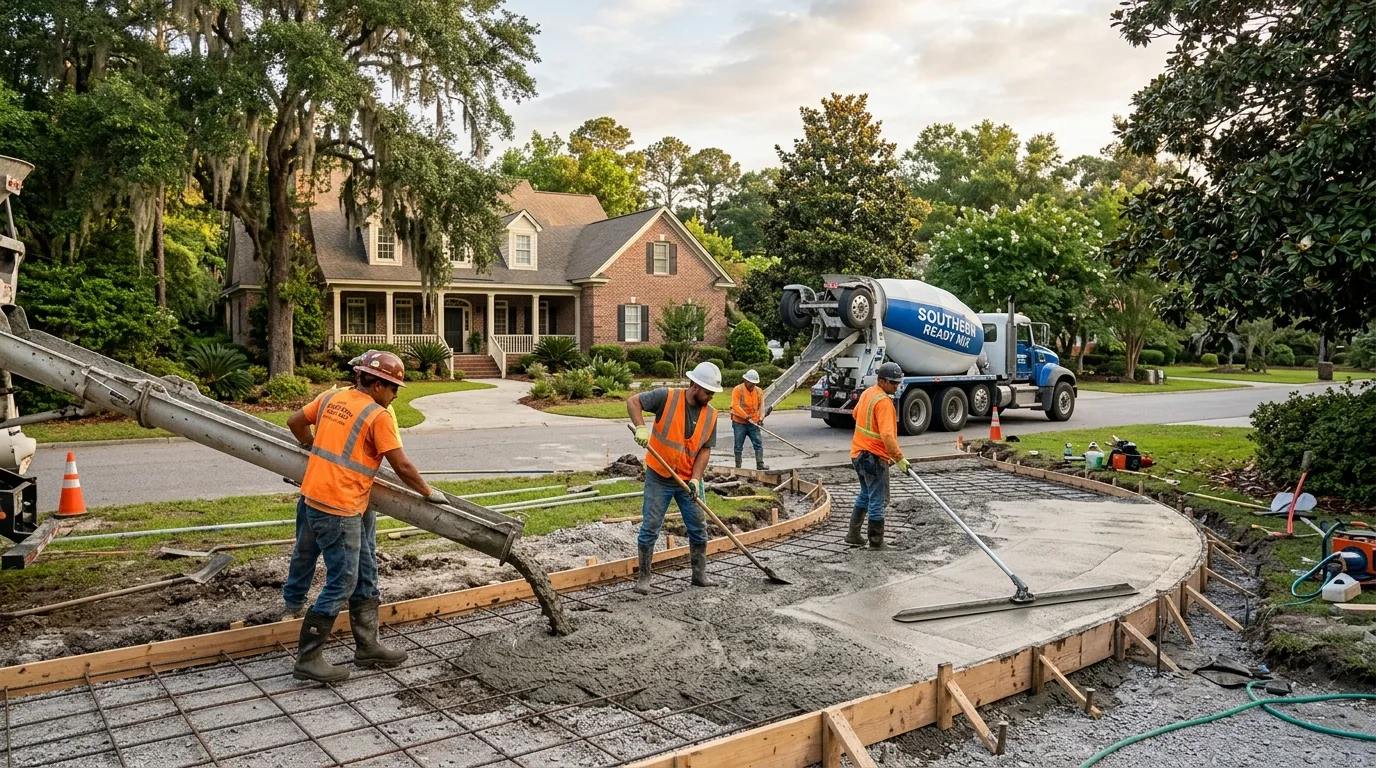
Grapevine, TX has one of the widest seasonal temperature ranges in the DFW Metroplex — January lows average 37°F while August highs average 96°F, with temperatures occasionally reaching 102°F. That 65-degree span between winter cold and summer heat creates a concrete installation window that requires careful timing. Pour in the wrong conditions and you risk surface cracking, premature curing, or a freeze failure that requires full slab removal. Pour in the right conditions and your concrete cures evenly, achieves full design strength, and lasts for decades.
In this post, we cover each season in Grapevine from a concrete installation perspective — ideal conditions, risks, precautions, and which seasons work best for different project types.
Ready to Schedule Your Grapevine Concrete Project?
Grapevine Concrete Company schedules concrete pours around North Texas weather conditions for best results. Call (888) 376-0955.
Why Concrete Curing Temperature Matters
Concrete achieves its design strength through a chemical process called hydration — water and cement reacting to form the calcium silicate hydrate crystals that give concrete its strength. The optimal temperature range for hydration is 50°F–75°F per the American Concrete Institute. Below 40°F, hydration essentially stops and fresh concrete can freeze, destroying its crystalline structure. Above 90°F, hydration accelerates too quickly and moisture evaporates faster than the reaction can use it, creating surface cracking before the slab has achieved sufficient strength.
In Grapevine’s climate, achieving ideal curing conditions requires season-aware scheduling. Properties in the Lakeview Estates and Dove Creek neighborhoods see the same temperature extremes as the rest of Grapevine, and concrete installation there benefits from the same seasonal planning that applies throughout Tarrant County.
Spring (March–May): Best Overall Season
Spring is the best overall season for concrete installation in Grapevine. Temperatures through these months fall within or near the 50°F–75°F ideal curing range. Rainfall is higher than fall, which can cause scheduling delays, but the consistent moderate temperatures allow contractors to pour without heat-mitigation measures or freeze precautions.
Spring is the most popular season for concrete patio and driveway installation in Grapevine — demand often builds through February and March, so scheduling early gives you better contractor availability and more schedule flexibility when rain delays occur. Concrete installation ordered in February for a March pour date is common practice among experienced North Texas contractors.
Summer (June–August): Manageable With Precautions
Grapevine’s summers — average highs above 88°F from June through September — represent the most challenging concrete installation window. The two primary risks are rapid evaporation causing surface cracking before finishing is complete, and accelerated set time that narrows the workable window for stamped concrete or decorative finishes.
How it’s managed: Summer concrete installation in Grapevine is done with early morning pours (6–8 AM start time to finish before peak heat), evaporation retarder applied to the surface immediately after screeding, and curing blankets or white polyethylene covering the slab immediately after finishing. We adjust our concrete mix for summer heat — using ice water in the mix and sometimes chilled aggregate — to extend working time.
Summer pours are workable for standard broom-finish driveways and utilitarian slabs. For stamped concrete, the narrow set-state window (30–45 minutes in peak heat vs. 60–90 minutes in moderate temperatures) requires an experienced crew that can stamp efficiently. We schedule summer stamped concrete projects with extra crew to complete the stamping phase quickly.
Fall (September–November): Best for Major Projects
Fall is the optimal season for major concrete projects in Grapevine — particularly stamped concrete, large driveways, and projects requiring the most precise finishing. Temperatures return to the 60°F–80°F range that provides a generous working window, rainfall is lower than spring, and the mild weather continues through November.
The combination of lower moisture variation in the clay soil (the hot summer has dried the ground; the fall rains haven’t fully saturated it yet) and moderate temperatures makes fall the most predictable season for concrete performance. Concrete poured in fall cures through the mild Grapevine winter, fully hardening before the following summer’s heat and UV begin affecting the surface.
For Grapevine homeowners planning large backyard patio renovations, deck replacements, or foundation work, fall scheduling consistently produces the most predictable results and the best conditions for the concrete to achieve its full design strength.
Schedule Your Fall Concrete Project in Grapevine
Fall is ideal for large concrete installations. Call (888) 376-0955 to get on the fall schedule.
Winter (December–February): Highest Risk
Winter is the riskiest season for concrete installation in Grapevine, primarily because of freeze risk. Fresh concrete must be protected from freezing temperatures for the first 48–72 hours after pouring. Grapevine’s average winter lows dip to 37°F in January, with temperatures occasionally dropping below 24°F during cold snaps. A hard freeze on concrete that hasn’t yet achieved sufficient strength (typically requiring 24–48 hours at above-40°F conditions) can cause the water in the concrete to expand and destroy the crystal structure, producing a slab that looks fine but has reduced strength and will spall prematurely.
When winter work is done: Small repairs and urgent projects can be done in winter with proper cold-weather protection: insulated blankets or heated enclosures over the slab, faster-setting concrete mixes with chemical accelerators, and monitoring of overnight temperatures. We do not schedule large driveways or patio installations for days when overnight temps are forecast below 35°F.
For non-urgent projects, the best advice for Grapevine homeowners in December through February is to wait for spring. The additional two to three months of waiting produces significantly better results and eliminates cold-weather risk.
Types of Projects by Optimal Season
- Large stamped concrete patios: Fall (best set-state window, lowest rain risk)
- Standard driveways: Spring or fall equally
- Concrete repair and crack filling: Spring, fall, or mild winter days above 50°F
- Foundation work: Spring or fall preferred; timing coordinated with engineering review
- Commercial concrete: Fall preferred for minimizing heat delays on large pours
Frequently Asked Questions
Can concrete be poured in summer in Grapevine?
Yes — with precautions. Early morning pours, evaporation retarder, adequate crew for stamped finishes, and curing blankets all manage the risks effectively. Our crews are experienced with North Texas summer concrete installation. The results are comparable to spring and fall work when these precautions are followed.
What if it rains after my concrete is poured in Grapevine?
Light rain on concrete that’s already past its initial set (2–4 hours post-pour) is generally not harmful. Heavy rain during or immediately after placement can wash out surface finish or dilute the surface paste, causing surface weakness. We monitor forecasts carefully and will delay a pour if significant rain is expected during the finishing window.
How long does concrete take to cure fully in North Texas?
Concrete is walkable within 24–48 hours and ready for vehicle traffic in 7–10 days. Full design strength (28-day cure) is achieved over approximately four weeks. In Grapevine’s summer heat, the first 7 days are the most critical — surface moisture must be maintained to achieve proper hydration.
Grapevine Concrete — Scheduled for Your Optimal Season
Grapevine Concrete Company plans every project around North Texas weather conditions. Call (888) 376-0955 for a free estimate and scheduling consultation.
Related: