
Cement vs. Concrete: What Grapevine Homeowners Need to Know
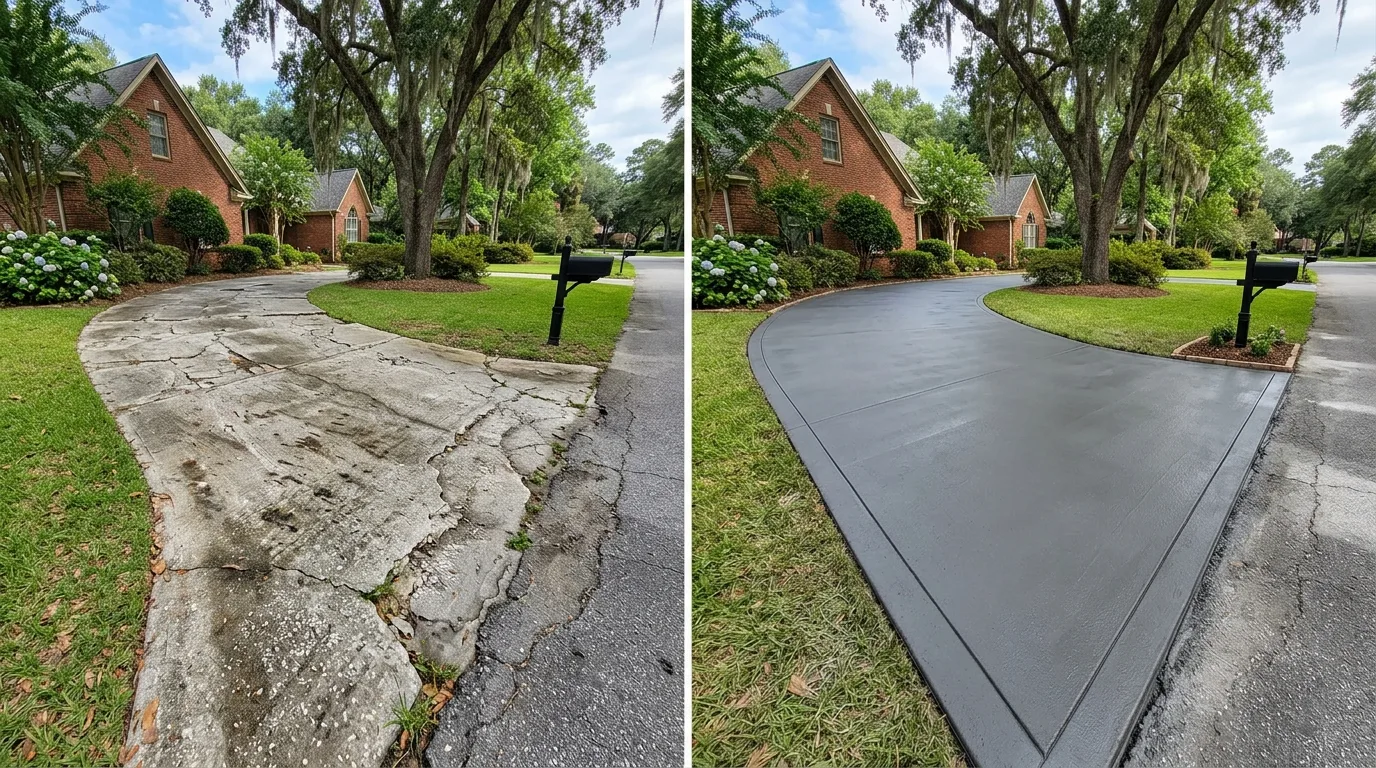
If you’ve ever asked a contractor for a “cement driveway” or “cement patio” and received a correction, you’ve experienced one of the most common miscommunications in home improvement. In everyday conversation, cement and concrete are used interchangeably — but they refer to two different materials, and understanding the difference matters when you’re making decisions about a project for your Grapevine home. Knowing what concrete actually contains helps you understand why mix specifications matter, why some installations hold up while others crack prematurely, and why the Grapevine building department specifies concrete — not just cement — in its foundation requirements.
Grapevine Concrete Questions Answered
Grapevine Concrete Company advises on mix specifications, project planning, and local code requirements. Call (888) 376-0955.
What Is Cement?
Cement — specifically Portland cement — is a fine gray powder made primarily from limestone, clay, and other materials heated to around 2,700°F in a kiln. The kiln process drives off carbon dioxide and creates a new compound called calcium silicate that, when mixed with water, undergoes a chemical reaction called hydration. That reaction produces the calcium silicate hydrate crystals that give cementitious products their hardness.
Cement is an ingredient. By itself, it doesn’t form a usable building material. It’s the binder that holds everything else together.
What Is Concrete?
Concrete is a composite material made from three primary components: Portland cement (the binder), aggregates (sand and crushed stone), and water. When these three are mixed in the right proportions and poured into forms, the cement hydrates and binds the aggregates into a hard, durable composite. The aggregates — ranging from fine sand to coarse gravel up to 3/4 inch — provide the bulk, compressive strength, and stability that cement paste alone cannot deliver.
That’s the core distinction: cement is an ingredient; concrete is the finished material. Just as flour is not the same as bread, cement is not the same as concrete.
Why Aggregate Mix Matters for Grapevine Projects
For projects in Tarrant County, the concrete mix specification — particularly the water-to-cement ratio and aggregate gradation — directly affects how well the slab performs on Grapevine’s expansive clay soil. Concrete with a higher water-to-cement ratio is weaker and more porous; concrete mixed to the correct ratio achieves the target PSI strength and resists moisture absorption that can accelerate freeze-thaw degradation.
For residential driveways and patios in Grapevine, the standard specification is 3,500 PSI concrete with a 4–5-inch slump. For foundation-bearing applications and any work requiring PE engineering — which includes all new foundations under Grapevine’s building code — higher PSI specifications of 4,000 PSI or above are typical.
Does “Cement Work” or “Cement Contractor” Mean Anything Different?
In practice, when a homeowner says “cement contractor” or “cement driveway,” they mean a concrete contractor installing a concrete driveway. The terminology confusion is so widespread that most concrete contractors understand both terms. But when you’re reviewing quotes or contracts, look for specific concrete specifications — PSI strength, water-to-cement ratio, base preparation depth — rather than just the word “concrete.”
A quote that specifies “3,500 PSI concrete with 4” compacted gravel base and #4 rebar on 18” centers” tells you much more about the quality of the installation than one that simply says “concrete driveway installation.”
What's in Your Grapevine Concrete Quote?
We provide detailed written quotes with full mix specifications, base prep depth, and rebar schedule. Call (888) 376-0955.
What About Fiber-Reinforced Concrete?
An increasingly common option for residential concrete in the DFW area is fiber-reinforced concrete — standard Portland cement concrete with polypropylene or steel fibers added to the mix. These fibers don’t replace rebar but provide micro-reinforcement that reduces surface cracking and plastic shrinkage cracking during curing.
For Grapevine projects where temperature during the pour is a concern — summer installations where rapid moisture loss is likely — fiber-reinforced concrete provides an added margin against surface cracking. It’s the same cost range as standard concrete in most cases.
Concrete vs. Other Common Paving Materials
Asphalt: Uses bitumen (petroleum-based) as the binder instead of cement. Asphalt is more flexible but softer, requiring periodic sealing and eventual overlay. Concrete is harder, longer-lasting, and doesn’t require the same maintenance cycle — see our concrete vs. asphalt driveway comparison for the full breakdown.
Pavers: Individual units of concrete or natural stone set in sand or mortar. Pavers are more forgiving of minor soil movement because they can shift individually without cracking. They’re more expensive per square foot than poured concrete and require periodic sand joint maintenance.
Gravel: No binder, no curing — just compacted aggregate. Much lower cost and good drainage but no structural strength for vehicle loads.
For most Grapevine driveways, patios, and slabs, poured concrete is the best combination of cost, durability, and structural performance given the local soil conditions.
Frequently Asked Questions
When someone says “cement floor,” what do they mean in practice?
They typically mean a polished or sealed concrete floor — the kind seen in modern commercial spaces and increasingly in residential interiors. The finish work is done on concrete, not raw cement paste. The terms are used interchangeably in home improvement contexts even when technically imprecise.
Does the brand of Portland cement matter for my Grapevine project?
Not materially for standard residential applications. Portland cement is a commodity product produced to ASTM C150 standards — the type (Type I/II is most common for residential) matters more than the brand. Your contractor should specify the type of cement in the mix design.
Why does concrete crack if it’s so strong?
Concrete is extremely strong in compression (resisting weight pushing down) but relatively weak in tension (resisting forces pulling it apart). Grapevine’s clay soil movements pull and push the slab from below — that’s why rebar and proper base preparation are the primary crack-prevention tools, not just higher cement content.
Concrete Installation in Grapevine Done to Spec
Grapevine Concrete Company uses 3,500 PSI concrete with full base prep on every residential project. Call (888) 376-0955.
Related: